
Life admin basics
Life Admin Checklist: What to Keep Track Of

Written by Shaquille
Team Duesy
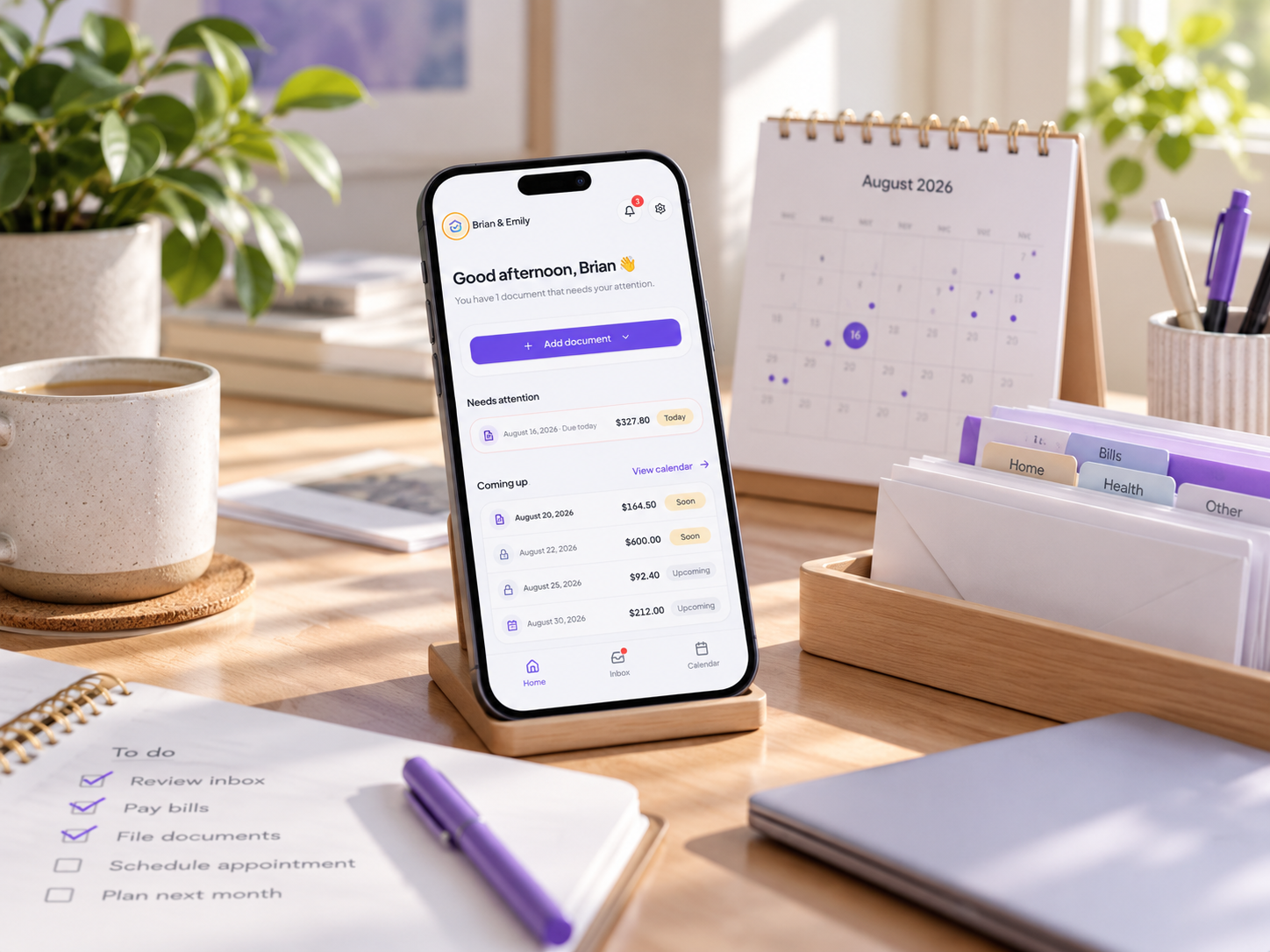
A life admin checklist helps you keep track of the practical tasks that are easy to forget: bills, documents, deadlines, subscriptions, appointments and household responsibilities.
You do not need to track every piece of information in your life. The most useful things to keep on your radar are usually the ones that require action, have a deadline or could cause a problem if you miss them.
A simple checklist gives those responsibilities somewhere to go instead of relying on memory alone.
On this page
- What is a life admin checklist?
- Bills and payments
- Important documents and contracts
- Deadlines and renewals
- Important emails
- Subscriptions
- Appointments and reminders
- Household admin
- Weekly, monthly and yearly life admin
- How to make life admin easier to manage
- Frequently asked questions
- Keep your life admin under control
What is a life admin checklist?
A life admin checklist is a simple overview of the personal administrative tasks you need to remember, review or complete.
It is not meant to become another complicated system to maintain. Its purpose is to make important responsibilities visible before they become urgent.
If you receive something that requires a payment, response, appointment, renewal or other action, it probably deserves a place in your life admin system.
The exact checklist will be different for every person or household, but most life admin falls into a few common categories.
Bills and payments
Start with bills and payments that have a due date.
Keep track of what needs to be paid, when it is due and whether any action is still required.
Typical examples include:
- household bills;
- insurance payments;
- rent or mortgage-related administration;
- phone and internet bills;
- childcare or school-related payments;
- memberships;
- recurring services;
- one-off invoices.
The important part is not necessarily storing every bill forever. It is making sure that a bill requiring attention does not disappear inside an inbox, document folder or pile of paperwork.
If a payment is due later, create a reminder while the information is still in front of you.
Important documents and contracts
Important documents often contain information that matters long after you first receive them.
That may include an insurance policy, rental agreement, employment document, warranty, membership agreement or another personal contract.
When reviewing a document, look for information such as:
- what the document relates to;
- who sent or issued it;
- whether you need to take action;
- important dates;
- renewal or expiry dates;
- cancellation terms;
- payment information.
Not every document needs ongoing attention. The useful distinction is between information you may want for reference and information that requires you to remember or do something later.
Deadlines and renewals
Deadlines are one of the easiest parts of life admin to miss because the document or email often arrives long before the date itself matters.
A contract may renew automatically. A policy may need to be reviewed. A membership may have a cancellation window. A form may need to be returned by a certain date.
When you encounter a future deadline, record it immediately rather than expecting yourself to remember it weeks or months later.
Useful dates to track may include:
- payment deadlines;
- contract renewals;
- cancellation deadlines;
- policy expiry dates;
- application deadlines;
- appointments;
- forms that need to be returned;
- important household or family dates.
A deadline becomes much easier to manage once it is separated from the document or email where you first found it.
Important emails
A lot of modern life admin arrives by email.
That creates a problem: an inbox is designed to receive messages, not necessarily to manage everything you need to remember.
An important email may contain a bill, appointment, contract update, deadline, request for information or another action.
When an email requires something from you, identify:
- what needs to happen;
- when it needs to happen;
- whether a reminder is needed;
- whether anyone else in your household needs to know.
Try not to use “I will leave the email unread” as your only reminder system. Important messages can quickly become buried underneath new email.
Subscriptions
Subscriptions are easy to start and easy to forget.
Keep track of services that renew automatically, especially when the price, renewal date or cancellation deadline matters to you.
This can include:
- streaming services;
- software;
- memberships;
- mobile services;
- online subscriptions;
- household services;
- free trials that become paid subscriptions.
You do not need to check every subscription every week. A periodic review is usually enough to spot services you no longer use or renewals you want to reconsider.
Appointments and reminders
Appointments are another common part of life admin.
Medical appointments, school meetings, household appointments and other commitments may arrive through letters, emails, apps or phone calls.
Once an appointment is confirmed, move the important details somewhere you will actually see them again.
That usually means keeping track of:
- date;
- time;
- location;
- what the appointment is for;
- anything you need to bring or prepare;
- whether someone else needs to attend.
A reminder shortly before the appointment can remove the need to keep thinking about it in the meantime.
Household admin
Life admin becomes more complicated when responsibilities are shared.
In a household, one person may receive a bill while someone else needs to deal with it. A school message may matter to both parents. A home-related contract may affect everyone even though only one person received the email.
Useful household admin may include:
- shared bills;
- insurance;
- school or childcare information;
- family appointments;
- home maintenance;
- household contracts;
- subscriptions;
- important shared deadlines.
The goal is not for everyone to see everything. It is to make sure that information affecting the household reaches the people who actually need it.
Weekly, monthly and yearly life admin
Not every life admin task needs the same amount of attention.
A simple rhythm can make the workload easier to manage.
Weekly
Check for new things that need action soon.
That might include bills, important emails, appointments and deadlines for the coming days.
Monthly
Review recurring responsibilities such as bills, subscriptions and tasks that have not yet been completed.
This is also a useful time to check whether something has been sitting on your list for too long.
Yearly
Some life admin appears only occasionally.
Review longer-term items such as insurance, memberships, contracts and other services that may renew or change over time.
The goal is not to spend hours reviewing your administration. A short, regular check is usually more useful than waiting until everything has built up.
How to make life admin easier to manage
The simplest life admin system is one that asks you to remember as little as possible.
When something important arrives, identify the information that matters while you are already looking at it.
If there is a deadline, record it. If something needs action later, create a reminder. If it affects someone else in your household, share what they need to know.
Technology can reduce some of this manual work as well.
Duesy is designed to help understand important documents and emails and identify information such as amounts, dates, deadlines and possible actions.
Instead of manually copying every important detail into another place, Duesy can prepare the relevant information for you to review before you confirm it.
That can make a life admin checklist less about repeatedly searching through documents and inboxes and more about seeing what actually needs your attention.
Frequently asked questions
What should be on a life admin checklist?
A life admin checklist should focus on responsibilities that require action or need to be remembered.
Common categories include bills, deadlines, contracts, subscriptions, important documents, appointments, important emails and household responsibilities.
You do not need to list everything you own or every document you receive.
How often should I review my life admin?
A short weekly review works well for things that need attention soon, while recurring bills and subscriptions may only need a broader monthly check.
Longer-term contracts, policies and memberships can be reviewed less frequently.
The right schedule is the one that helps you notice important tasks before they become urgent.
Is a life admin checklist the same as a to-do list?
Not exactly.
A normal to-do list can contain anything you want to complete. A life admin checklist focuses specifically on the practical administration behind your personal life and household.
Some items may become regular to-do tasks, but the checklist also helps you keep track of future dates, renewals and responsibilities that are not immediately actionable.
Keep your life admin under control
Life admin is easier when important information does not depend on memory alone.
A simple checklist can help you see what needs attention, while reminders and automation can reduce the amount of manual work involved.
Duesy helps turn important documents and emails into clear information, actions, deadlines and reminders, so it is easier to stay on top of everyday admin.